




Why homeware & general merchandise is so hard to classify
The Harmonized System is not organised by material alone. A great deal of homeware is classified by what it is made from, but plenty is classified by what it is, and the General Rules of Interpretation set the order in which those questions are asked. For homeware retailers, that means the same product can land in completely different chapters, and getting it wrong has a real cost.
A product in ceramics (Ch 69), glass (Ch 70), plastics (Ch 39), base metal (Ch 73/76/82/83), wood (Ch 44) or textile (Ch 63) sits in a different chapter for each material. One catalogue can span seven or more.
Gift sets, cookware sets and bundles may qualify as goods put up in sets for retail sale. Where they do, GRI 3(b) gives the set one code based on the component that provides its essential character. Not every multi-item pack qualifies, so each is assessed on its own facts.
A table with a wood top and metal frame, or an artificial plant with a plastic pot, wire stems and textile flowers, can be made of several materials. Where material governs the code, component-level analysis identifies which one gives the product its essential character, a judgement generic tools routinely get wrong.
General merchandise retailers refresh thousands of homeware lines every season. Each new line needs a correct code fast, and where a country of origin is supplied, TariffTel surfaces the trade agreements that may apply so you can check potential duty savings.

Why the same product can take a different code
Take a mug. A plain ceramic mug is Chapter 69, in glass Chapter 70, in plastic Chapter 39 and in stainless steel Chapter 73, because no single heading covers "mug", so the material decides. But change what the product is and material stops being the answer: a heated mug is classified by its heating element in Chapter 85. The same word, several very different codes, and material is only part of the story.

How TariffTel handles retail & homeware
A rigorous, three-stage process built on deep retail sector expertise and designed to catch errors before they reach your supply chain, at the scale a general-merchandise catalogue demands.
Identify the product, then the material.
We start with the product as a whole: what it is, and which chapter and section notes and Rules of Interpretation apply, in order. Where classification turns on material, we identify the constituent material of every product and, for multi-material goods, carry out component-level analysis to determine which material governs the code.
Sets and trade-agreement data.
For goods that qualify as sets put up for retail sale, we apply GRI 3(b) to find the component that gives the set its essential character. Where you supply a country of origin, we surface the free trade agreements that could apply, so your team can check the rules of origin and any duty saving. TariffTel provides this data; it does not assess or confirm preferential origin on your behalf.
Verification and roll-out at scale.
Every code is backed by a specialist customs expert before delivery. TTVerified handles thousands of seasonal SKUs and supports continuous new product roll-outs, and we monitor tariff and rule changes so your classifications can be kept current as the tariff changes.
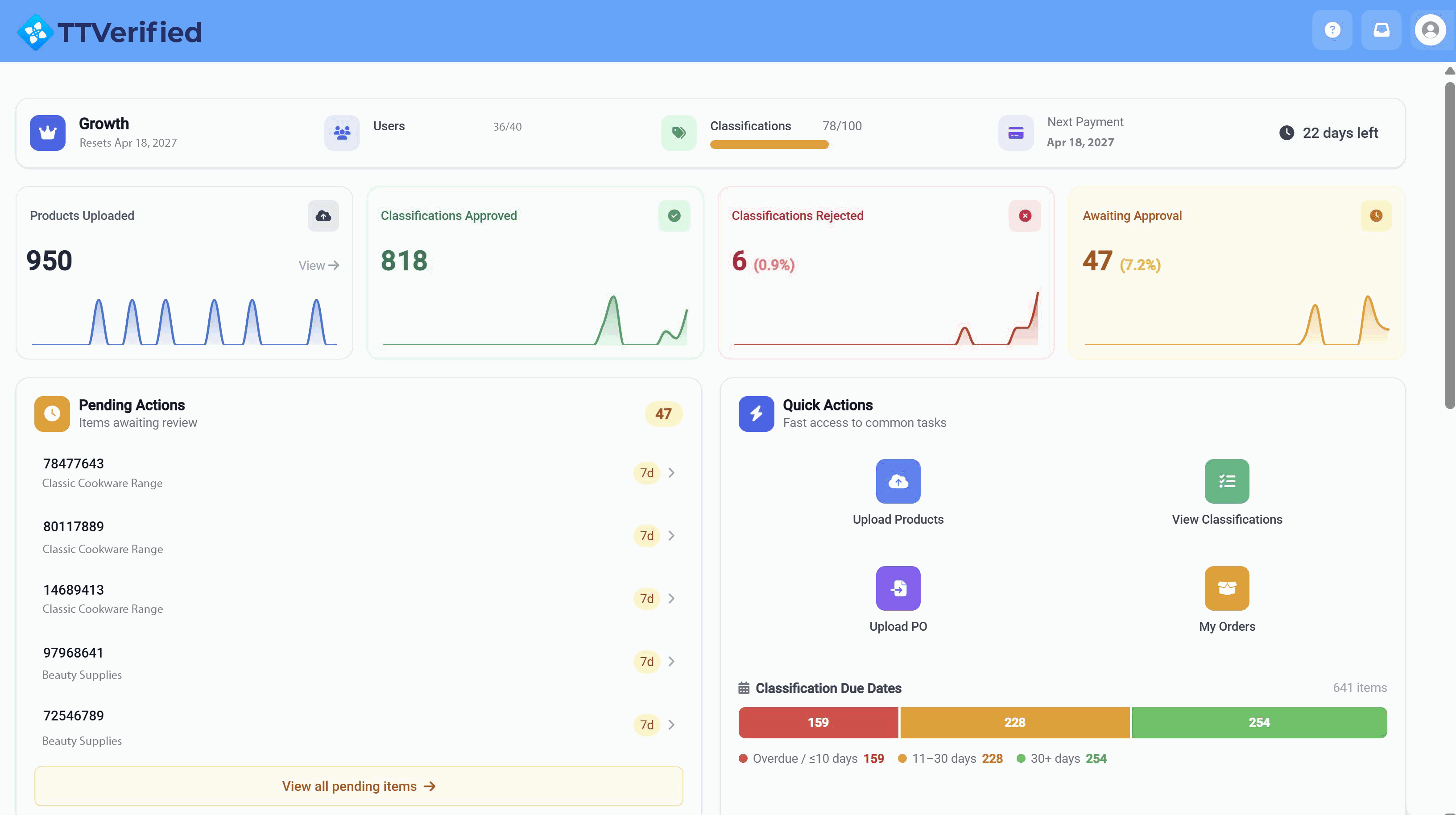
How M&S centralised classification across general merchandise
Marks & Spencer turned to TariffTel to bring its sprawling homeware and general-merchandise classification under one roof — reducing broker reliance and eliminating spreadsheets.
TariffTel's tariff code accuracy is unbeatable. When high standards of compliance are crucial in your organisation, businesses need a solution that guarantees accuracy.
Every homeware category, classified
From ceramics and glassware to soft furnishings, lighting and multi-material gift sets. TariffTel's experts handle the full breadth of retail and homeware classification.







Built for the breadth of general merchandise
Homeware classification is not about one product type. It is about every kind of product, every material, retail sets and thousands of SKUs at once. TariffTel understands retail and homeware classification at a level generic tools simply do not reach.
Retail & Homeware classification questions
Common questions from homeware buyers, general-merchandise retailers and importers about tariff classification.
Talk to a SpecialistRetail & homeware classification guides

UK CBAM starts on 1 January 2027: is your commodity code about to make you a CBAM importer?
From 1 January 2027, imported steel, aluminium, cement, fertiliser and hydrogen carry a UK carbon charge. Your commodity code decides whether you are caught.
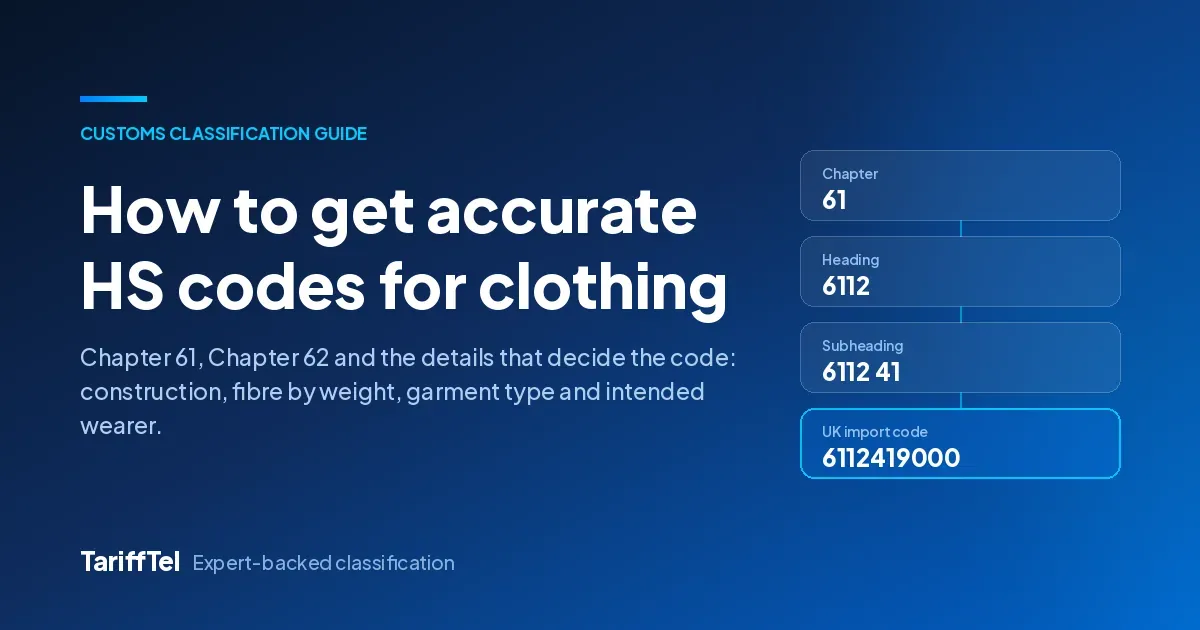
How to get accurate HS codes for clothing
Clothing is one of the most misclassified categories at customs. Here is how to get garment and footwear codes right, and keep them right.
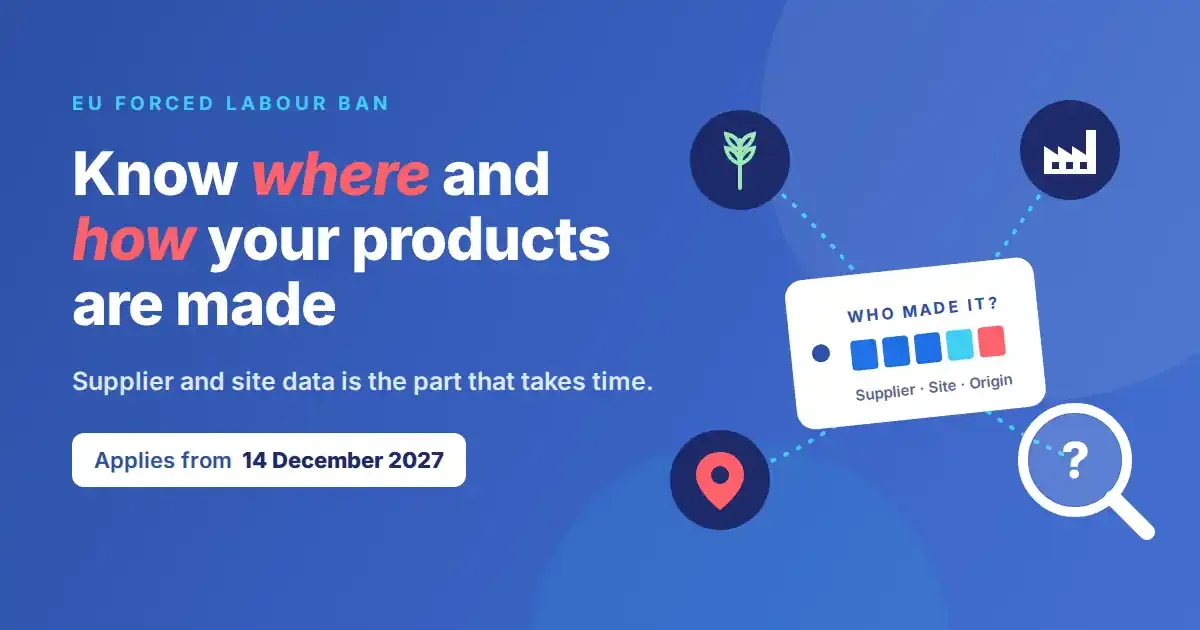
EU forced labour ban: why knowing where and how your products are made is crucial
From 14 December 2027, products made with forced labour cannot be sold in or exported from the EU. Here's why supplier data is the part that takes time.
Stop guessing your homeware tariff codes.
Join M&S and leading UK retailers who trust TariffTel for accurate, expert-verified HS codes across every homeware and general-merchandise line.