




Food classification errors are expensive
A single composition change can shift a product across tariff headings or entire chapters. Most businesses discover the cost of incorrect codes too late.
Industry-wide error rates remain stubbornly high, particularly in food and drink where composition complexity drives misclassification.
Incorrect codes cause border holds, spoiled perishable goods and broken retail supply chains. Perishable food shipments are particularly vulnerable to delays.
Resolving classification errors drains customs and compliance teams. Source: Boston Consulting Group (2025, "The Hidden Power of Customs Management in Global Trade") — preventable classification and documentation mistakes cause 20–40% of shipment delays.
HMRC can issue penalties of £2,500 per incorrect commodity code, plus back-duty demands going back four years. For SMBs, even a handful of errors adds up fast.
Complexity that generic tools cannot handle
A vegan composite ready meal made primarily of mycoprotein with trace elements of vegetables. A frozen fruit smoothie blend with added vitamins. An organic cereal bar with 23% cocoa butter. Each demands precise data and expert judgement.
How we classify food and drink products
A rigorous, three-stage process built on deep grocery sector expertise and designed to eliminate errors before they reach your supply chain.
Analysis
We study tariff books, review established rulings, and apply General Interpretive Rules to understand how your product should be classified. For food products, this means assessing chapter notes, section notes and composition thresholds.
Data Collection
We gather every data point that affects the code: ingredient lists with percentages, nutritional values, sugar and fat content, species information, processing methods, packaging type, weight and country of origin.
Verification & Monitoring
Every code is verified by a specialist customs expert before delivery. TTVerified then monitors tariff updates continuously so your codes stay correct as regulations change and trade agreements evolve.
How M&S achieved 100% food classification compliance
When Brexit introduced new customs requirements for food shipments between Great Britain and Northern Ireland, Marks & Spencer turned to TariffTel.
TariffTel's tariff code accuracy is unbeatable. When high standards of compliance are crucial in your organisation, businesses need a solution that guarantees accuracy.
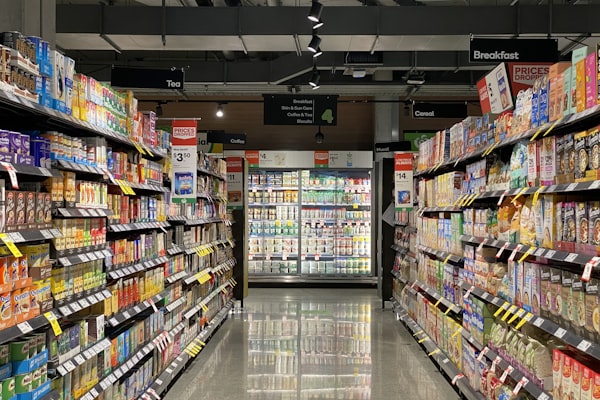
Every food and drink category, classified
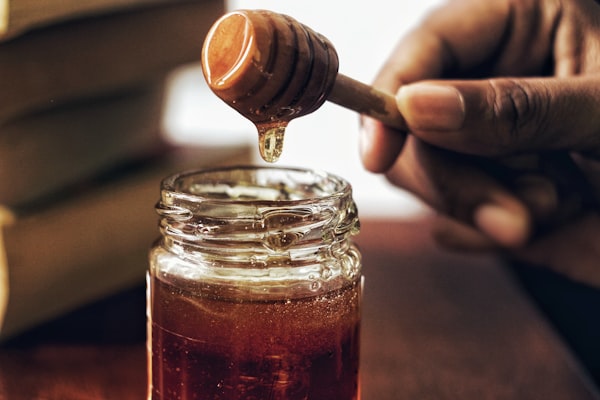
From fresh produce to composite ready meals, alcoholic beverages to dietary supplements. TariffTel's experts handle the full spectrum of food and drink classifications.



Built for the complexity of food trade
TariffTel won the FDEA Export Service Provider of the Year 2025 for a reason. We understand food and drink classification at a level generic tools simply do not reach.
Food & Drink Classification Questions
Common questions from food producers, exporters and retailers about tariff classification.
Talk to a SpecialistFood & drink classification guides

UK CBAM starts on 1 January 2027: is your commodity code about to make you a CBAM importer?
From 1 January 2027, imported steel, aluminium, cement, fertiliser and hydrogen carry a UK carbon charge. Your commodity code decides whether you are caught.
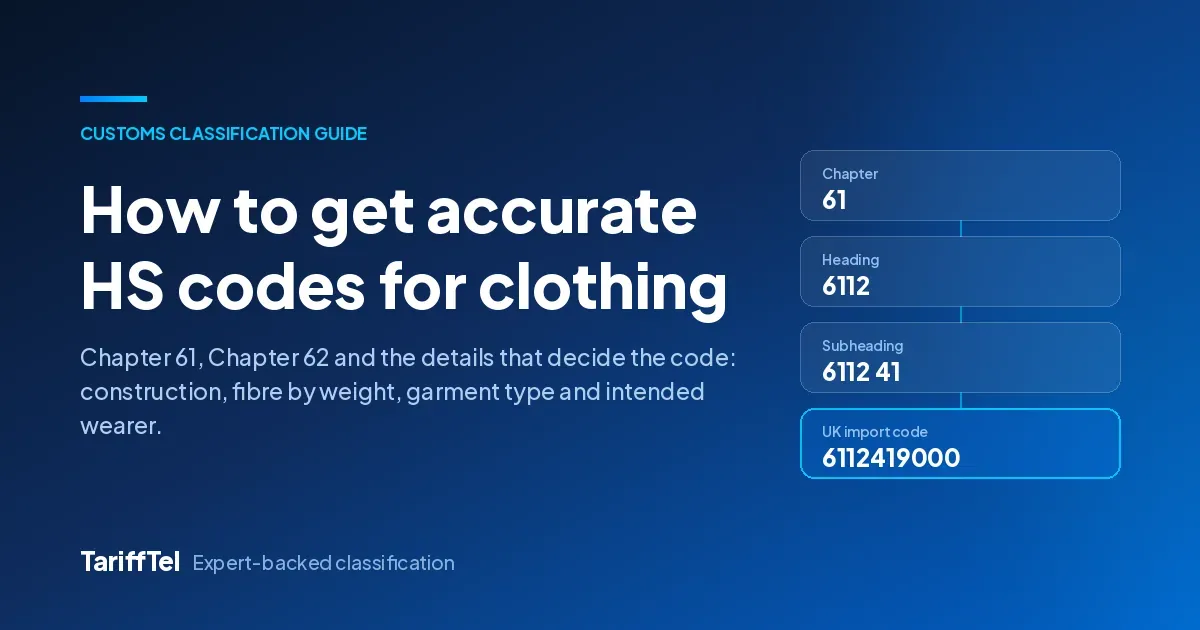
How to get accurate HS codes for clothing
Clothing is one of the most misclassified categories at customs. Here is how to get garment and footwear codes right, and keep them right.
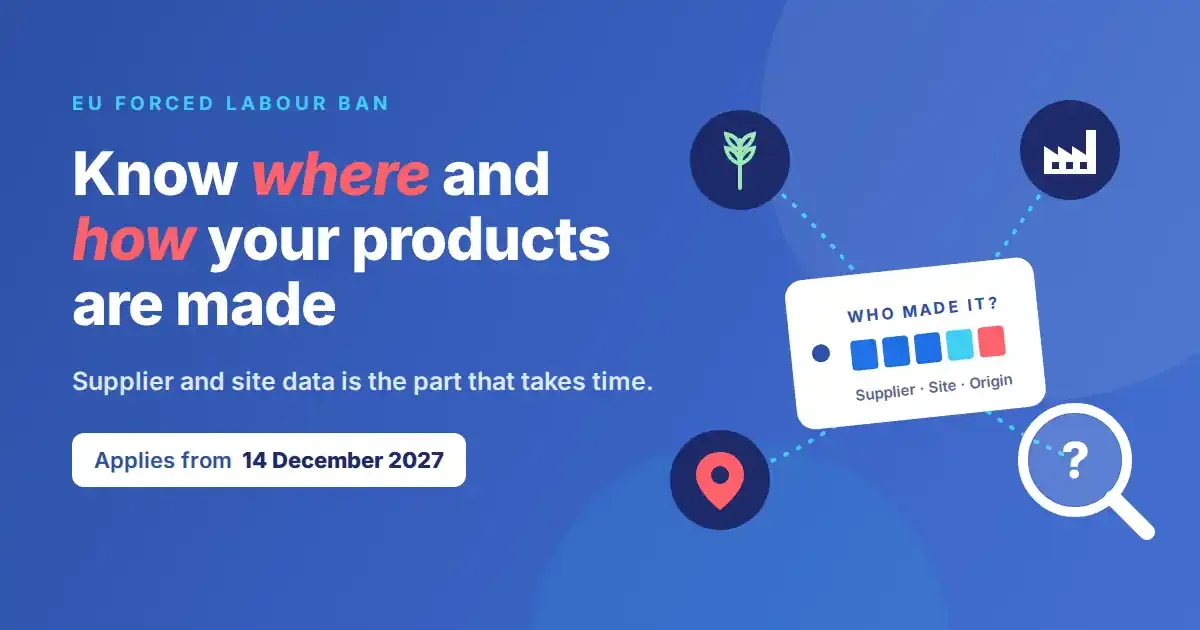
EU forced labour ban: why knowing where and how your products are made is crucial
From 14 December 2027, products made with forced labour cannot be sold in or exported from the EU. Here's why supplier data is the part that takes time.
Stop guessing your food tariff codes.
Join M&S, ASDA and leading food exporters who trust TariffTel for accurate, expert-verified HS codes across every food and drink category.