Key takeaways
- HMRC's Morrisons ruling resulted in £4.7m in unpaid anti-dumping duties and VAT over a disputed origin claim
- A US Department of Justice case saw a company undervalue over $51m in imports, leading to prison sentences
- The US case resulted in $8.4m in unpaid duties and $15m ordered repaid to the government
- Both cases highlight the growing scrutiny customs authorities apply to classification decisions worldwide
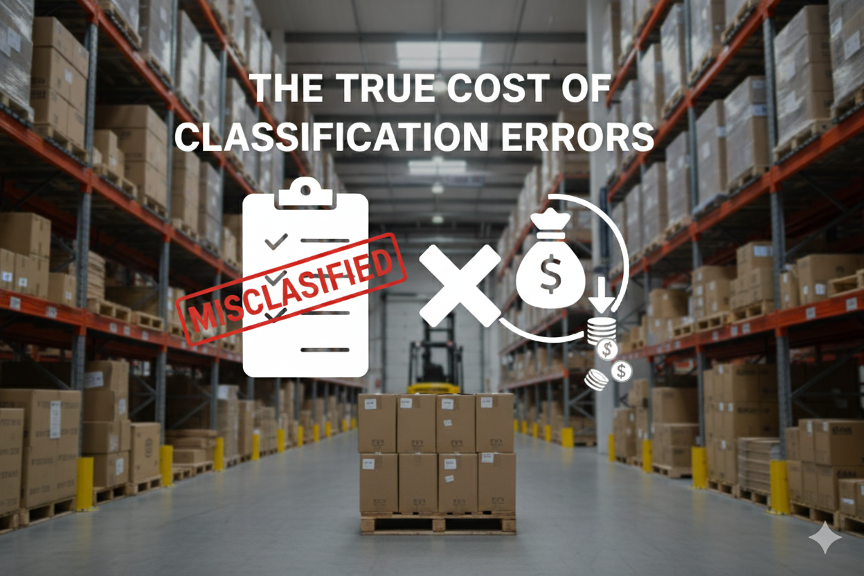
A £4.7 million liability for aluminium foil in the UK. Eight-figure fines and federal prison sentences for tariff fraud in the US. This is the reality facing importers today who get classification wrong.
We’re seeing authorities probing deeper, questioning the decisions and documentation behind classification decisions and demanding clear audit trails. And as two recent cases from the UK and US reveal, the financial and reputational consequences can be very real.
Here, we examine what went wrong for Morrisons in a UK tribunal, and how a US importer’s missteps escalated into criminal charges and prison time. More importantly, we explore what businesses can do to ensure their tariff codes are correct and the systems and processes that can deliver assurance, so nothing is left to chance.
Morrisons: A wake-up call for UK importers

In a landmark ruling, HMRC successfully challenged Morrisons over the declared origin of imported aluminium foil. The retailer had classified the foil as originating in Thailand, citing final-stage processing like heating, cutting and packaging. But HMRC argued, and the tribunal agreed, that these steps were not substantial enough to shift the product’s true origin from China, where core manufacturing had taken place.
The reclassification resulted in £4.7 million in unpaid anti-dumping duties and VAT. The tribunal also accepted evidence from supplier websites suggesting the Thai facility was structured to avoid duties. That was deemed enough to question the legitimacy of the declared origin.
When misclassification becomes criminal
While UK importers may not face the same legal repercussions, a recent US Department of Justice case shows how far customs enforcement can go. A company and two of its executives were found guilty of submitting false tariff classifications and undervaluing imported goods by over $51 million. The result was $8.4 million in unpaid duties, $15 million ordered to be repaid to the government, and lengthy prison sentences for the individuals involved.
Though extreme, the case illustrates that mistakes in customs are attracting scrutiny worldwide and the result can lead to serious reputational and financial risk.
Ensuring classification accuracy
Getting classification right isn’t just about avoiding fines. It’s about enabling trade with confidence. A robust, audit-ready classification system creates:
-Documented digital trails for every decision
-Confidence that your codes are grounded in the latest regulatory guidelines
-Assurance that your origin declarations align with manufacturing data
It’s why businesses choose TariffTel. We don’t just provide a tariff code, we provide a process, grounded in documentation, verified supplier input and expert human insight. This is precisely where TTVerified adds value — expert-backed, audit-ready classification at scale.
Need a classification health check?
If you’re unsure whether your current process can stand up to scrutiny, our team can help. We work with UK retailers like M&S to ensure classifications are not just accurate, but audit-ready.
Get in touch and speak to our expert team.

Elizabeth Davies
Elizabeth has more than 15 years’ experience in customs classification, advising UK retailers, manufacturers and food producers on getting commodity codes right and keeping them right. A regular speaker at Food and Drink Federation (FDF) webinars, she leads the team behind TariffTel’s expert-verified classification methodology.
Connect with Elizabeth on LinkedIn