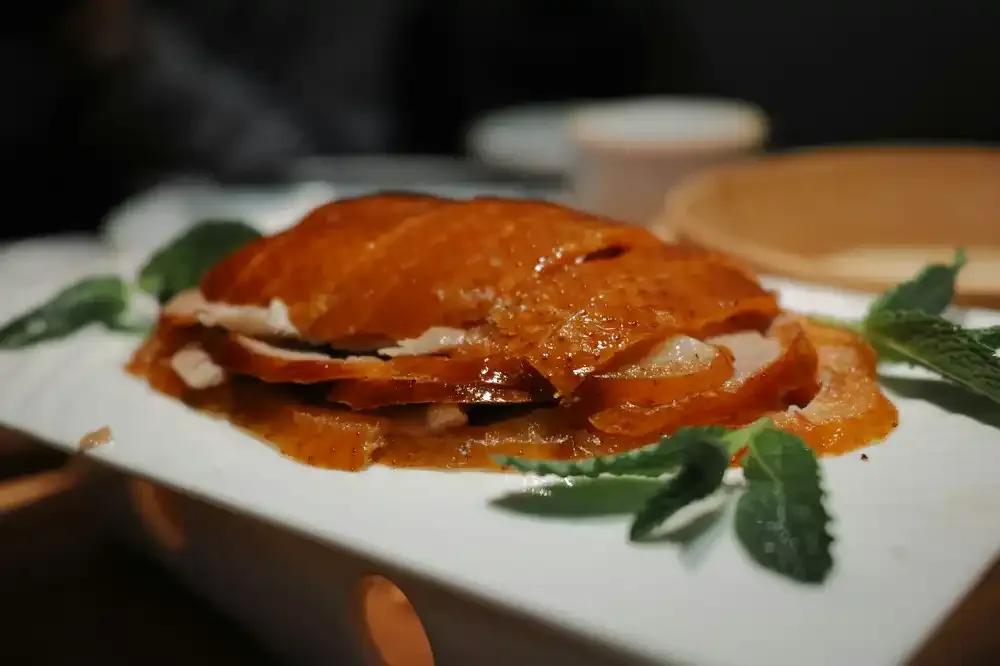
On 9 July 2026 the European Commission opened its first-ever anti-dumping investigation into a Chinese agricultural product — Pekin duck. The UK poultry tariff has been restructured around it, so even businesses that never touch Chinese duck may find their codes have moved.
Key takeaways
- An EU anti-dumping investigation into Chinese Pekin duck opened on 9 July 2026 — no duty is in force yet.
- Heading 0207 has been restructured with 42 new duck subheadings, shifting the codes below them — this affects any poultry importer, not just duck.
- 1602 39 (prepared or preserved duck and goose, including ready meals) is easy to miss and easy to get wrong.
- Northern Ireland businesses are exposed to any EU duty that results, under the Windsor Framework.
- Christmas and Chinese New Year ranges classified before July need to be re-checked against the new structure.
An EU anti-dumping case on Chinese duck has just moved codes across the UK poultry tariff, including some that have nothing to do with duck. It's something new that happened this month, and we're already supporting food and drink customers through it.
On 9 July 2026 the European Commission opened an anti-dumping investigation into Pekin duck from China. Published in the Official Journal as notice C/2026/3584, it follows a complaint lodged on 26 May by five EU duck producers, who allege Chinese duck is being sold below normal value on the back of state subsidies and cheap feed. It is the first EU anti-dumping case against a Chinese agricultural product.
This is essentially an EU duty story, but the practical takeaway for anyone importing or exporting poultry is a code change — and a significant one.
Classifying duck now carries a live investigation in the EU and a possible duty within months, and the poultry tariff itself has been restructured around it. If you ship any form of poultry and assume this “EU anti-dumping” case has nothing to do with you, that assumption could mean your shipment is stopped. A product flagged for anti-dumping can also draw additional scrutiny at the border.

Get your ducks in a row
Does it affect UK importers? Yes, through the code changes. This was an EU-driven change, but the UK tariff has moved with it. Heading 0207 has been restructured: 42 new subheadings for duck have been added, and because they were inserted in the middle of the heading rather than at the end, the existing subheadings below them have shifted down. Heading 0210 99 went from one code to two. So even if you import chicken, turkey or goose and never touch Chinese duck, the code you have always declared under 0207 may now sit at a different number.
No duty is payable anywhere yet, and nothing is due at the point of initiation. But the code you declare must be right from the day the tariff changes, not from the day a duty lands.
EU anti-dumping duties do not apply to GB imports, which run through the UK's own Trade Remedies Authority. The code changes still apply; the EU duty does not.
Northern Ireland is the exception. Under the Windsor Framework, goods subject to a provisional or definitive EU anti-dumping duty cannot be declared “not at risk” moving into Northern Ireland, even under UK Internal Market Scheme authorisation. They move “at risk” and are charged the EU tariff. So if a duty lands on Chinese Pekin duck, a business bringing it into Northern Ireland pays it.
Businesses importing through an EU entity, or selling into the EU, are exposed on the same terms as any EU importer.
Christmas and Chinese New Year make this urgent
Duck and goose are Christmas products, and a lot of festive classification is done months ahead. Anyone who classified their Christmas range before July has done it against the old structure and will need to check it again. Chinese New Year follows soon after, with Pekin duck at the centre of it. Two of the biggest duck and goose seasons of the year both fall while this case is live, so the businesses most exposed are often the most organised ones — the ones who classified early.
Which codes are in scope?
The investigation covers Pekin duck meat in almost every form, whole and in cuts, across around 25 CN subheadings under three headings. As a result of the restructure, the codes around them have moved too, so this reaches wider than duck alone.
- 0207 — Duck meat and cuts, fresh, chilled or frozen
- 0210 99 — Poultry meat (salted or in brine)
- 1602 39 — Duck or goose, prepared or preserved, including ready meals that contain them
1602 39 is the one that catches people out. It covers duck or goose that has been prepared or preserved, and that includes any prepared meal with duck or goose in it, not just the plain cut. If you make or import ready meals, the case can reach further into your range than you expect.
Every code in the notice is marked “ex”, meaning only the Pekin duck part of each subheading is caught, not duck in general. An anti-dumping duty attaches to a code and an origin, not to a product description, so the code you declare decides what you owe.
Why act now, not later
Because the case names anti-dumping, customs have an extra reason to look a little more closely. A load of duck that arrives under the wrong code is exactly what gets pulled for inspection, and duck does not wait. Fresh or frozen, it is perishable, so a hold is not just demurrage and a delayed delivery — it can be the whole consignment written off.
Key takeaways
- An EU anti-dumping investigation into Chinese Pekin duck opened on 9 July 2026 — no duty is in force yet.
- Heading 0207 has been restructured with 42 new duck subheadings, shifting the codes below them — this affects any poultry importer, not just duck.
- 1602 39 (prepared or preserved duck and goose, including ready meals) is easy to miss and easy to get wrong.
- Northern Ireland businesses are exposed to any EU duty that results, under the Windsor Framework.
- Christmas and Chinese New Year ranges classified before July need to be re-checked against the new structure.
Check your duck and poultry codes while it still costs nothing
Now is the time to confirm which of your products the case could reach, especially anything crossing into Northern Ireland or sold into the EU, and any Christmas or Chinese New Year range classified before July.
Check a product's code in a few clicks with TTExplore, or get the expert-backed code with anti-dumping flags and a full audit trail on TTVerified.
FAQ

Elizabeth Davies
Elizabeth has more than 15 years’ experience in customs classification, advising UK retailers, manufacturers and food producers on getting commodity codes right and keeping them right. A regular speaker at Food and Drink Federation (FDF) webinars, she leads the team behind TariffTel’s expert-verified classification methodology.
Connect with Elizabeth on LinkedIn