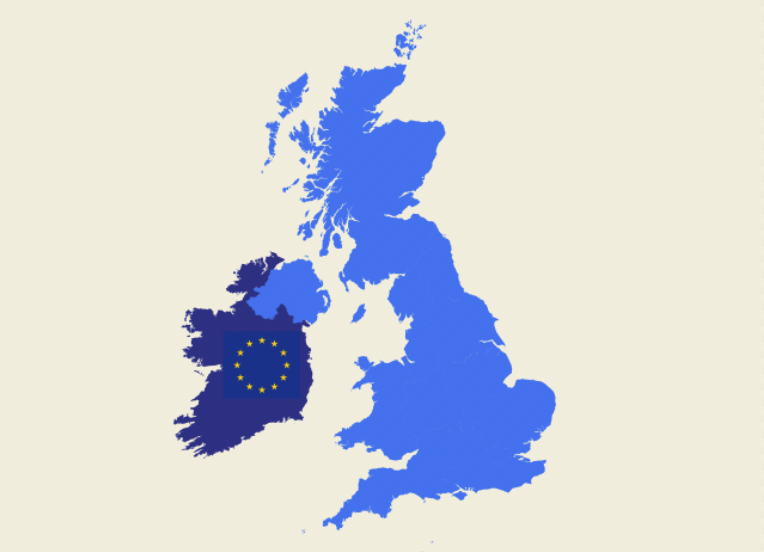
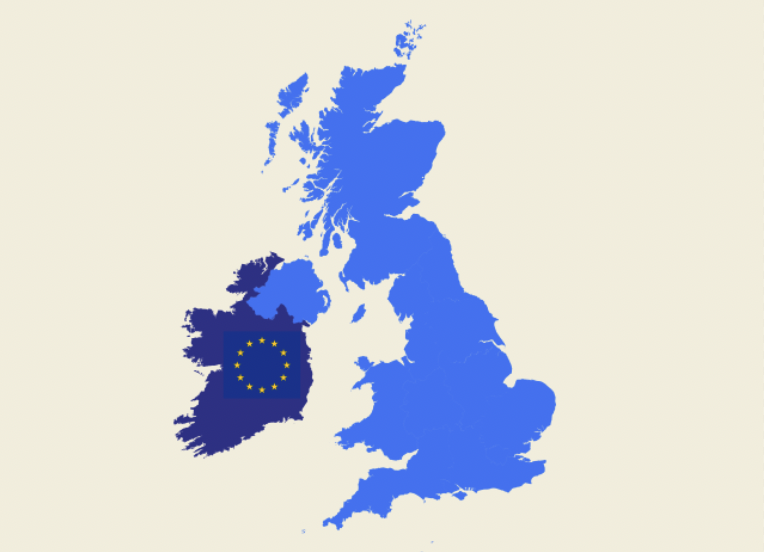
Confirmed by the UK government on 23 June 2026, the EU Deforestation Regulation will apply in Northern Ireland under the Windsor Framework. If you place cocoa, coffee, palm oil, soy, cattle, rubber or wood products on the Northern Ireland market, your commodity code — not your ingredients list — decides whether you're in scope.
Key takeaways
- The EUDR applies in Northern Ireland under the Windsor Framework, confirmed by the UK government on 23 June 2026.
- Large and medium operators must comply from 30 December 2026; most micro and small operators have until 30 June 2027.
- Scope is decided by commodity code against Annex I, not by ingredients — a code decision comes before a sourcing one.
- Getting the code wrong means either needless due diligence paperwork, or non-compliance you didn't know you had.
- Audit your product and code list against Annex I now, including the borderline and multi-commodity cases.
Many businesses are shipping on codes someone else chose, with reasoning no one recorded or can now find. The EU Deforestation Regulation (EUDR) is about to make that a problem in Northern Ireland. Confirmed by the UK government on 23 June 2026, the EUDR will apply in Northern Ireland under the Windsor Framework, the arrangement that keeps Northern Ireland inside the EU single market. If you place cocoa, coffee, palm oil, soy, cattle, rubber or wood products on the Northern Ireland market, you carry the same obligations as an EU operator.
Under the EUDR, your commodity code is what decides whether a product needs deforestation due diligence at all. Classify it wrong and you either file paperwork you never needed, miss the statement that keeps your goods moving compliantly into Northern Ireland, or face penalties linked to turnover which could amount to significant sums.
That is the part many people miss. The EUDR is treated as a sourcing and sustainability question, and it is. But the first step is a classification one.
When does the EUDR start to apply in Northern Ireland?
The regulation lands by company size, not all at once. Large and medium operators are first. Smaller operators get longer, except on wood, where the existing timber rules carry the date forward.
- Large and medium operators and traders — 30 December 2026
- Micro and small operators, wood products already under the EU Timber Regulation — 30 December 2026
- Micro and small operators, all other relevant products — 30 June 2027
So the “new year 2027” framing is fair: for most operators of any scale, the obligation is live from the turn of the year. The lead time you have left is for getting your products in order, not for deciding whether to act.
Which products fall under the EUDR?
Seven commodities sit at the core: cattle, cocoa, coffee, palm oil, rubber, soy and wood. The regulation then reaches down into the products derived from them, which is where most food and drink businesses are caught without realising. Chocolate is in. Coffee extracts are in. Leather is in. Furniture, tyres and many paper products are in.
Annex I of the EUDR is the only list that matters. It names every in-scope product by its commodity code, the same Combined Nomenclature codes that sit under the Harmonized System you already use for customs. If your code is on the list, you are in scope. If it is not, you are not. Here is how that looks for the commodities most food and drink businesses handle.
- Cocoa — cocoa beans (1801), cocoa paste (1803), cocoa butter (1804), cocoa powder (1805), chocolate (1806)
- Coffee — coffee, roasted or not (0901), and certain coffee extracts (2101)
- Palm oil — palm oil (1511), palm kernel oil (1513)
- Soy — soya beans (1201), soya oil (1507), oilcake (2304)
- Cattle — beef (0201, 0202), raw hides and leather (4101)
- Wood and rubber — sawn wood and furniture (4407, 9403), natural rubber and tyres (4001, 4011)
Two points of detail decide the outcome. First, many Annex I entries carry an “ex” marker, meaning only part of the code is caught. Second, where a product is made from more than one of these commodities, only the component classified as the main commodity is in scope. Annex I is also subject to proposed changes from the European Commission, so the list you audited last year may not be the list that applies.
Why does your commodity code decide whether the EUDR applies?
Because the regulation is written around codes, not ingredients. A product is in scope when its commodity code appears in Annex I.

Take the example of a bar of soap made with palm oil. Palm oil is a regulated commodity, so instinct says the soap is included. It is not. Finished soap is classified under heading 3401, which is not in Annex I, so the soap sits out of scope even though palm oil went into it. Compare that with a chocolate bar: the cocoa content classifies it under 1806, which is in Annex I, so it is included, and the cocoa is the component you must diligence.
If your classification is wrong, your EUDR exposure is wrong before you start. That's why accurate classification matters here.
What happens if your products are classified wrong?
A wrong code generally means two consequences, and both cost money.
- You over-classify into scope. A product sits under an Annex I code it does not belong in, so you build a due diligence file, gather geolocation data and submit statements through TRACES NT for goods that never needed any of it.
- You under-classify out of scope. An in-scope product is shipping under a code that is not in Annex I, so no due diligence statement is filed. The product is non-compliant the moment it is placed on the Northern Ireland market — the shipment is held and you scramble to retrofit evidence you should have collected at source.
Under the EUDR, a wrong code does not just change your duty. It changes whether you are compliant at all.
How do you audit your products for the EUDR?
Work from the code up, not the product down. The aim is a clean, evidenced list of which of your products are in scope and which are not. Here are our top tips.
- Pull your full product and code list. Every SKU you place on the Northern Ireland market, with its current commodity code.
- Check each code against Annex I. Mark in scope or out of scope. Treat any product containing cocoa, coffee, palm oil, soy, cattle, rubber or wood as one to verify.
- Handle the borderline cases. Multi-commodity products, “ex” codes and borderline derived goods need further consideration, with a reason recorded.
- Keep the audit trail. For every in-scope product you need to prove deforestation-free origin; for every out-of-scope product you want to show why you correctly filed nothing.
Our classification solutions give you the correct commodity code in a few clicks — expert-backed codes, flagging EUDR alongside duty and other measures, with the full audit trail. Speak to our team about the solution that supports your business as regulation such as EUDR is introduced.
Key takeaways
- The EUDR applies in Northern Ireland under the Windsor Framework, confirmed by the UK government on 23 June 2026.
- Large and medium operators must comply from 30 December 2026; most micro and small operators have until 30 June 2027.
- Scope is decided by commodity code against Annex I, not by ingredients — a code decision comes before a sourcing one.
- Getting the code wrong means either needless due diligence paperwork, or non-compliance you didn't know you had.
- Audit your product and code list against Annex I now, including the borderline and multi-commodity cases.
Check your codes before the deadline, not after
The EUDR deadline for Northern Ireland is now set. Your product codes are the one part of it you can control today. Audit them now with TTVerified and know exactly which products need a due diligence statement, which do not, and why — with the evidence to show for it.
FAQ

Elizabeth Davies
Elizabeth has more than 15 years’ experience in customs classification, advising UK retailers, manufacturers and food producers on getting commodity codes right and keeping them right. A regular speaker at Food and Drink Federation (FDF) webinars, she leads the team behind TariffTel’s expert-verified classification methodology.
Connect with Elizabeth on LinkedIn