TariffTel wins at the FDEA Export Awards 2025
 4 mins
Topics
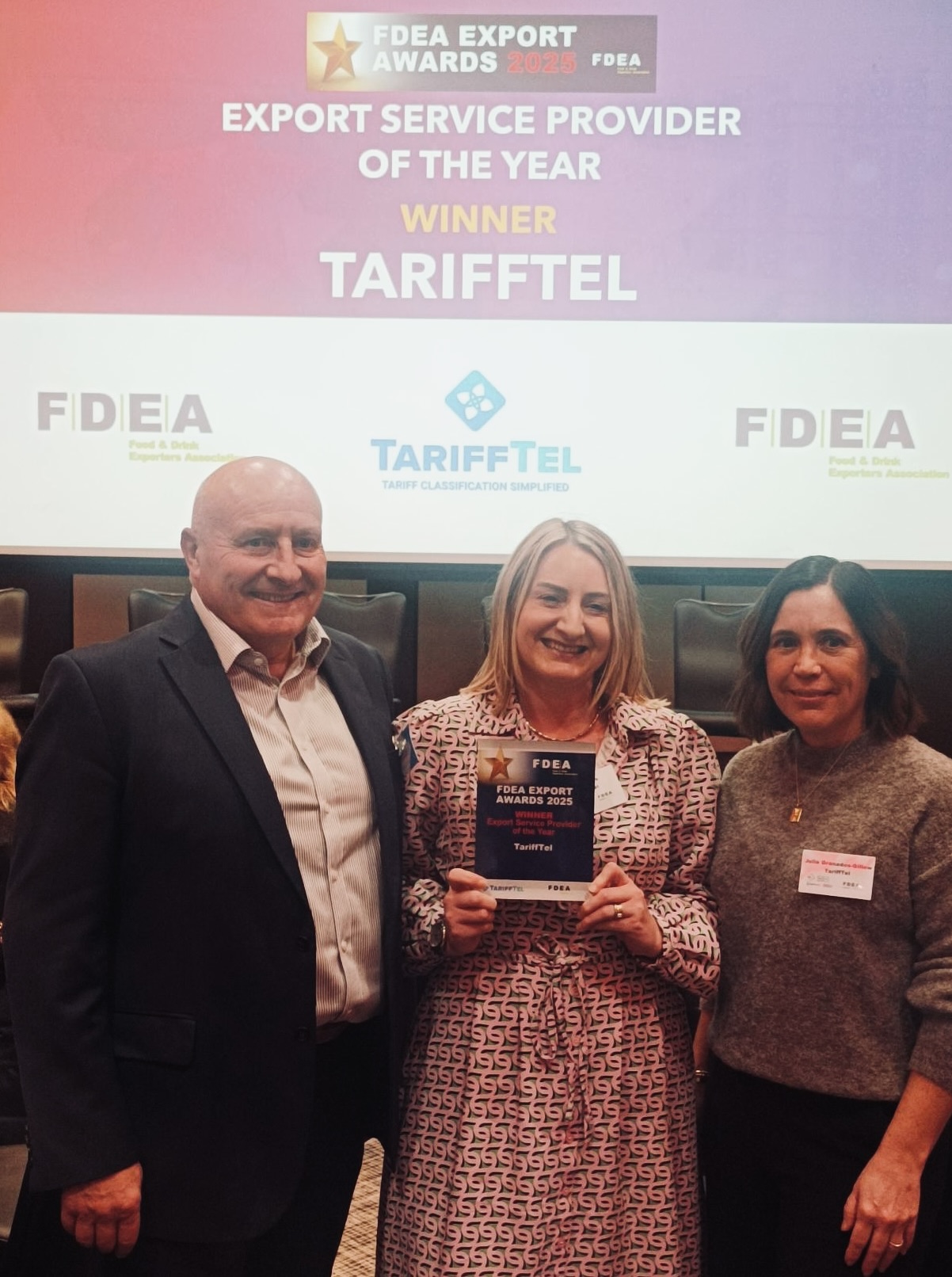
 We’re thrilled to share that TariffTel has been named Export Service Provider of the Year at the FDEA Export Awards 2025!
It’s a proud moment for our team and clear recognition that customs classification is a critical part of successful international trade.
This award doesn’t just celebrate our platform and our brilliant people, it underscores that accurate, compliant tariff codes are the foundation of global trade, especially in complex sectors like food and drink.
Why classification deserves the spotlight
Behind every smooth, compliant export lies a correct tariff code. But for UK food and drink manufacturers and retailers, getting classification right is anything but simple.
From fluctuating tariff codes and post-Brexit regulatory changes to lengthy ingredient lists and intricate production methods, classification in food and drink is among the most challenging areas in trade. Misclassification can lead to shipment delays, regulatory penalties, and overpaid duties.
Our win at the FDEA Awards reflects our commitment to helping exporters overcome these challenges. The TariffTel platform has been built by our classification experts and captures and stores all the nuanced product data and classification logic required for accurate, audit-ready results in this particularly complex sector.
Supporting the food & drink industry
Our team has extensive experience in the food and drink sector working with leading names like M&S Food. This award is proof of the far-reaching business impact of getting classification right. From supporting AEO certification to providing compliance confidence, our system helps streamline and strengthen trade operations.
The complexities of food & drink classification
Classification in the food and drink sector is anything but straightforward. To accurately classify a product, you need to take all product information into account, including a detailed breakdown that goes far beyond the basic ingredients.
A product’s classification depends on:
-Detailed ingredient composition – even minor variations in ingredients can affect the tariff code
-Nutritional information – fat content, sugar levels, and other attributes can determine how a product is classified
-Physical state – fresh, frozen, or dried products often have different tariff codes
-Country of origin – rules of origin impact duty rates and eligibility for trade agreements
-Packaging and presentation – the way a product is packed can influence classification and duty calculations
Staying ahead of regulatory change
 Tariff classifications change. Updates to the Harmonised System (HS) and regional regulations mean tariff codes can change regularly. In 2025, for example, changes to the classification of tomatoes have impacted importers and exporters globally.
Without a robust system which can provide audit-ready tariff codes, businesses risk the consequences of non-compliance. That’s why real-time updates, expert human oversight and data accuracy become essential in classification.
The role of digital tools like TariffTel
Customs classification solutions, like TariffTel, take the guesswork out of the process by:
-Gathering precise product details from suppliers, ensuring every ingredient and characteristic is accounted for
-Integrating with existing systems to provide real-time updates and ensure compliance
-Offering an auditable and automated system, reducing manual errors and speeding up customs clearance
For food and drink exporters, getting classification right isn’t just about compliance, it’s a strategic advantage. With the right tools and expertise, businesses can avoid delays, reduce costs, and expand with confidence into global markets.
See how M&S Food leverages TariffTel to manage classification seamlessly and compliantly.
Winning Export Service Provider of the Year is a reminder that classification done right can unlock real business value.
If you’re a food and drink business looking to strengthen your export operations, get in touch with our team and see what accurate classification can do for you.
Other Useful Resources
Blog
2 mins
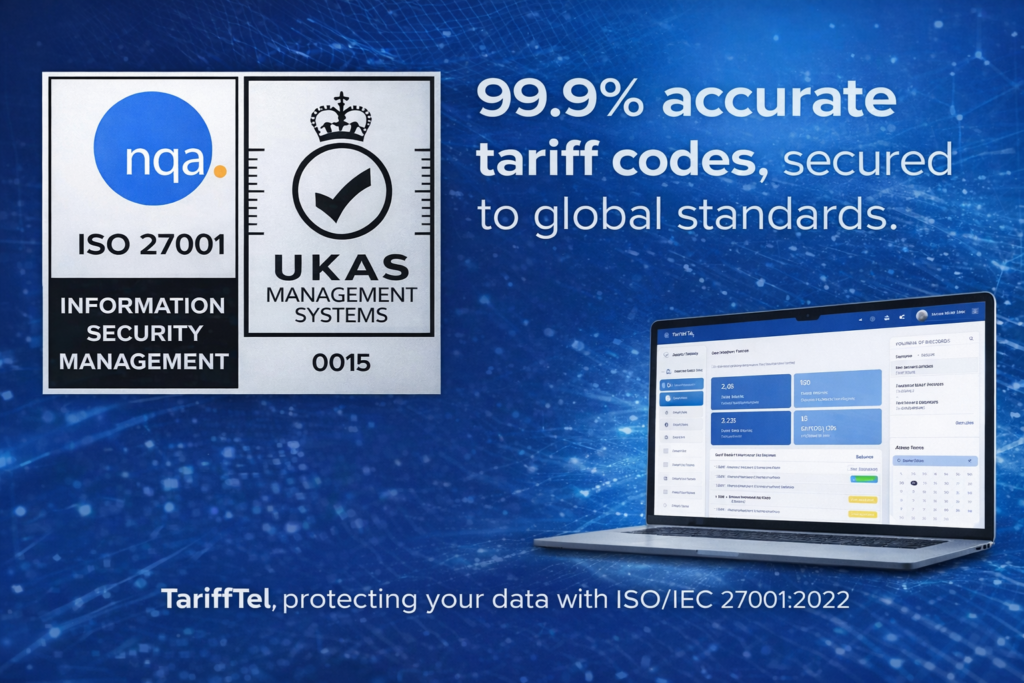
TariffTel is now ISO 27001 certified
Your product data, protected to the highest standard. We’ve achieved ISO/IEC 27001:2022 certification, the internat...
Blog
4 mins
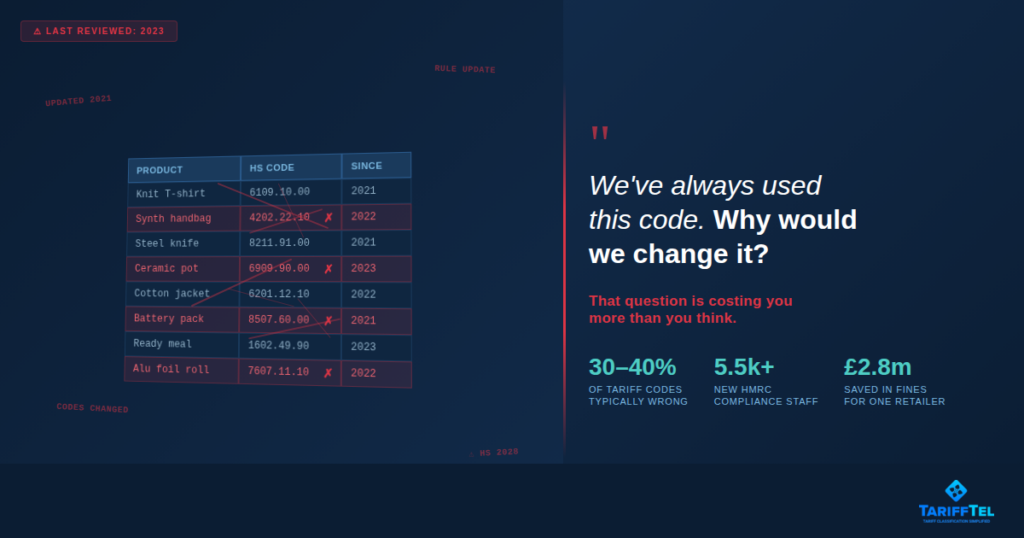
“We’ve always used this code. Why would we change it?”
That question is costing you more than you think. It sounds reasonable. The code worked last time. Your broke...
Blog
5 mins
Why 2 out of every 5 tariff codes are typically wrong
And what it’s costing you... Tariff codes might look like a routine administrative step when you’re preparing goo...


