Tariff Book updates for 2026
 4 mins
Topics
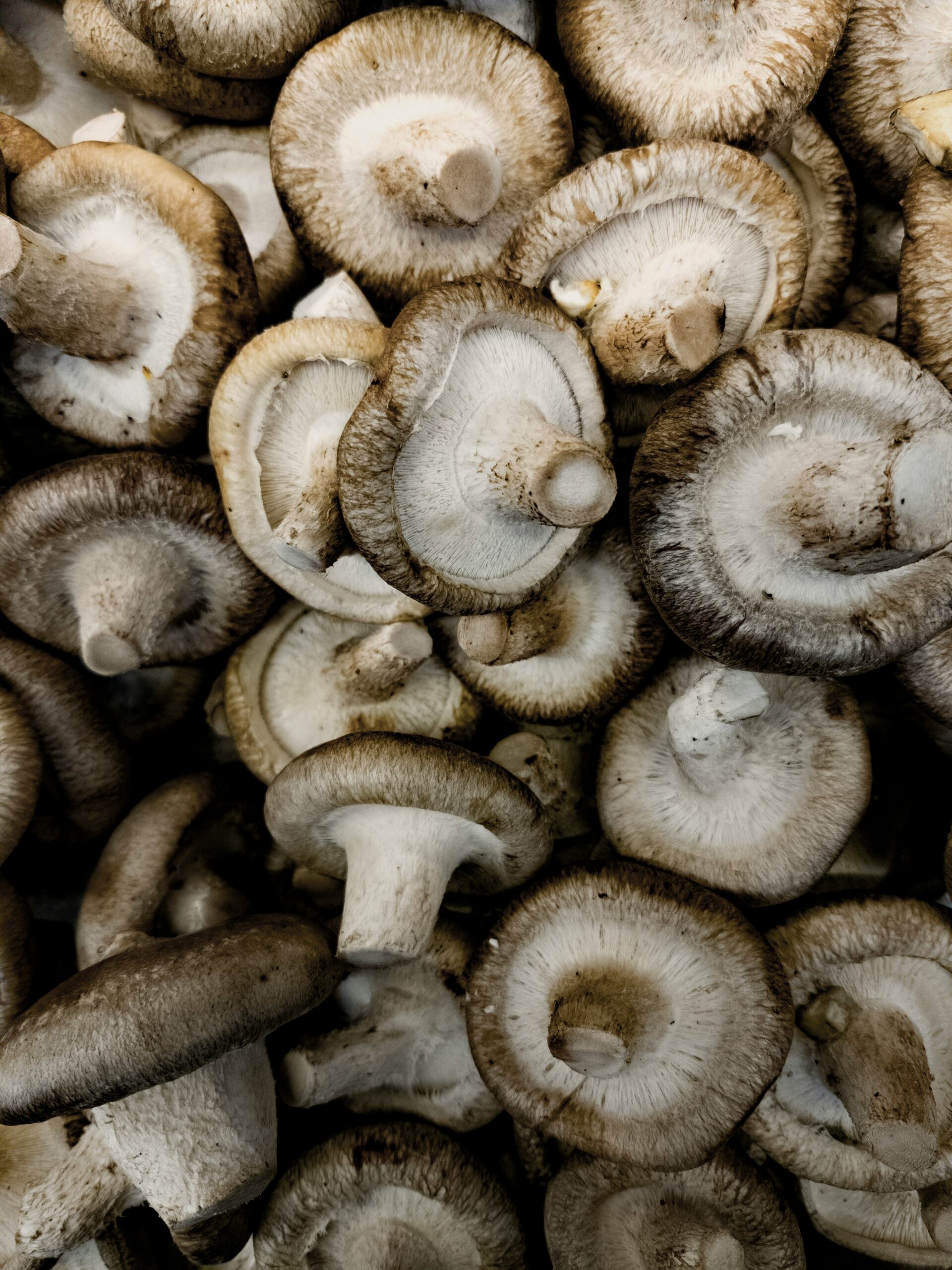
As we head into 2026, another round of tariff book changes have come into force. Many relate to electricals and chemical products, also important changes to food products and consumer goods, all with the potential to go unnoticed unless you have a process in place to monitor updates.
For importers, exporters, compliance officers, and supply chain managers, staying up to date with changing tariff codes is essential for compliance, accurate duty calculation, and fast customs clearance. The responsibility to get tariff codes right sits firmly with you, not your broker.
What’s interesting with this latest round of updates is that changes can land at any time, even Christmas Eve as we saw this time, and businesses are expected to be ready. That’s why systems like TariffTel, which keep pace with classification changes, are a business necessity in international trade today. Here’s some of the changes that have come into force.
What’s changed in the 2026 tariff book update for food and drink?
HMRC sent out notifications on 24 December 2025 with changes that came into force on 1 January 2026. These included updates in how to classify mushrooms and sweet potatoes specifically.
 Mushrooms: Simplified
This time around, classification for mushrooms was simplified. For example, codes ending in 10 and 90 were replaced with a single code: 0709530000. A consolidation that, while seemingly simple, still needs attention.
This is a good reminder that simplification of the tariff book can catch businesses out as much as the introduction of new tariff codes.
Sweet Potatoes: From side dish to spotlight
There were changes affecting codes starting with 2008 including the removal of the specific heading for water chestnuts. The new structure now covers certain sweet potato preparations, such as seasoned sweet potato wedges. The updated code for this product is 2008999100.
Supermarkets and food retailers like M&S, who stock a range of sweet potato products, will need to pay close attention on this one. Even small shifts in codes can have broad operational impacts.
What else changed in the 2026 tariff book update?
 The final significant update landed on 31 December 2025, covering a wide range of sectors:
-Animal feed and chemicals
-Flat-rolled steel
-Mobile cranes, likely tied to Chinese imports
-Toys – a key area for consumer goods importers
For toys, one trend stood out: the removal of codes ending in 10 and 90. It might seem minor, but for importers of remote control cars, toy drones, bubble machines, and robot toys, this has an impact. Even small changes can mean non-compliance if you don’t get it right.
Classification is moving faster than ever
One thing this year’s updates make clear is that there’s no single “tariff update day.” Codes can be changed, consolidated, or restructured without warning. Even Christmas Eve saw the release of critical updates.
This level of unpredictability means businesses cannot rely on manual spreadsheets or once-a-year reviews to keep track, those that due run significant risk of being caught out. When classification updates are unpredictable, systems and processes must be proactive, not reactive.
Why technology is key to compliance in 2026
With tariff updates affecting any product category at any time, a robust classification system is a strategic advantage. The right technology helps businesses:
-Stay up to date automatically
-Manual tracking of tariff book updates is not scalable. A smart classification platform applies changes in real time so your classifications stay current and compliant.
-Capture the small details that matter – directly from suppliers in the case of TariffTel
-Every digit counts, even the smallest change. Automated tools like TariffTel reduce the risk of human error and ensure no small detail is overlooked.
-Operate faster across borders
-Accurate, up-to-date codes mean fewer customs delays, more accurate duty calculations, and stronger supplier relationships.
-Build audit-ready records
With changes rolling out at any time throughout the year, every classification decision must be tracked. Audit trails today must be complete, accurate, and stand up to scrutiny. If they don’t, the risks can be high leading to fines, shipment delays and court cases in the case of British supermarket Morrisons.
How to get classification right in 2026
Classification updates are not a once-a-year event. Staying compliant requires a commitment to:
-Maintaining accurate and detailed product data
-Using a real-time classification system like TariffTel to maintain audit-ready records
-Empowering your team with tools and training to manage ongoing changes
When classification is treated as a strategic process rather than a checkbox, businesses gain better margin control, reduce audit risk, and build confidence and speed into their trade operations. This gives your business the advantage.
If accurate tariff classification is a priority for your business in 2026 and you want to see how TariffTel’s classification platform keeps your codes up to date and your compliance intact, get in touch for a demo.
Other Useful Resources
Blog
3 mins
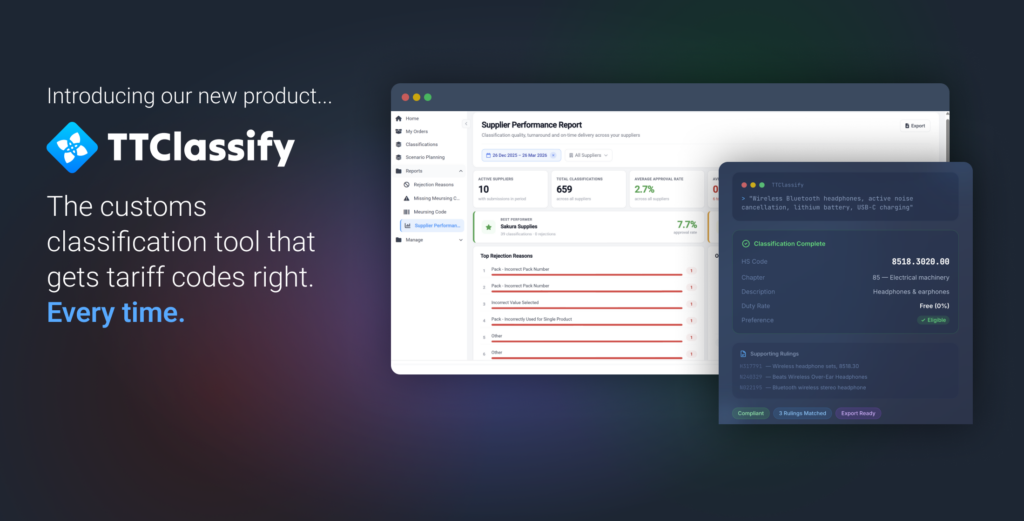
Introducing TTClassify. Same accuracy. More ways to get started.
If you've been following TariffTel for a while, you'll know we don't compromise on tariff code accuracy. Our e...
Blog
3 mins
Meet TariffTel at IFE Manufacturing 2026
Visit our stand at IFE Manufacturing, ExCeL London | 30 March – 1 April | Stand N670 We’re exhibiting at ...
Blog
2 mins
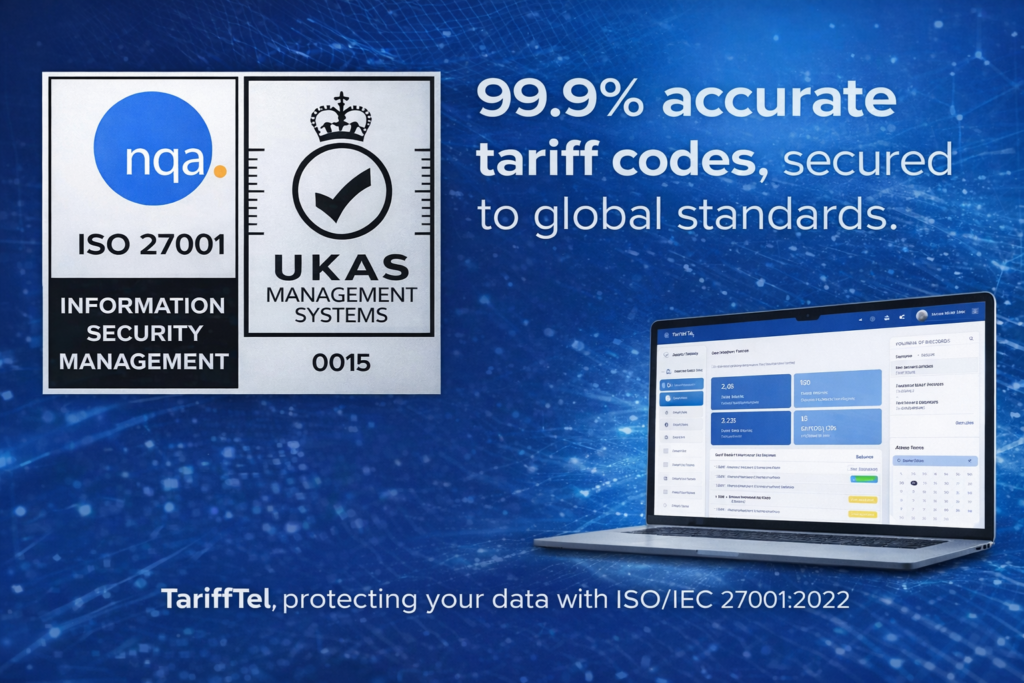
TariffTel is now ISO 27001 certified
Your product data, protected to the highest standard. We’ve achieved ISO/IEC 27001:2022 certification, the internat...


