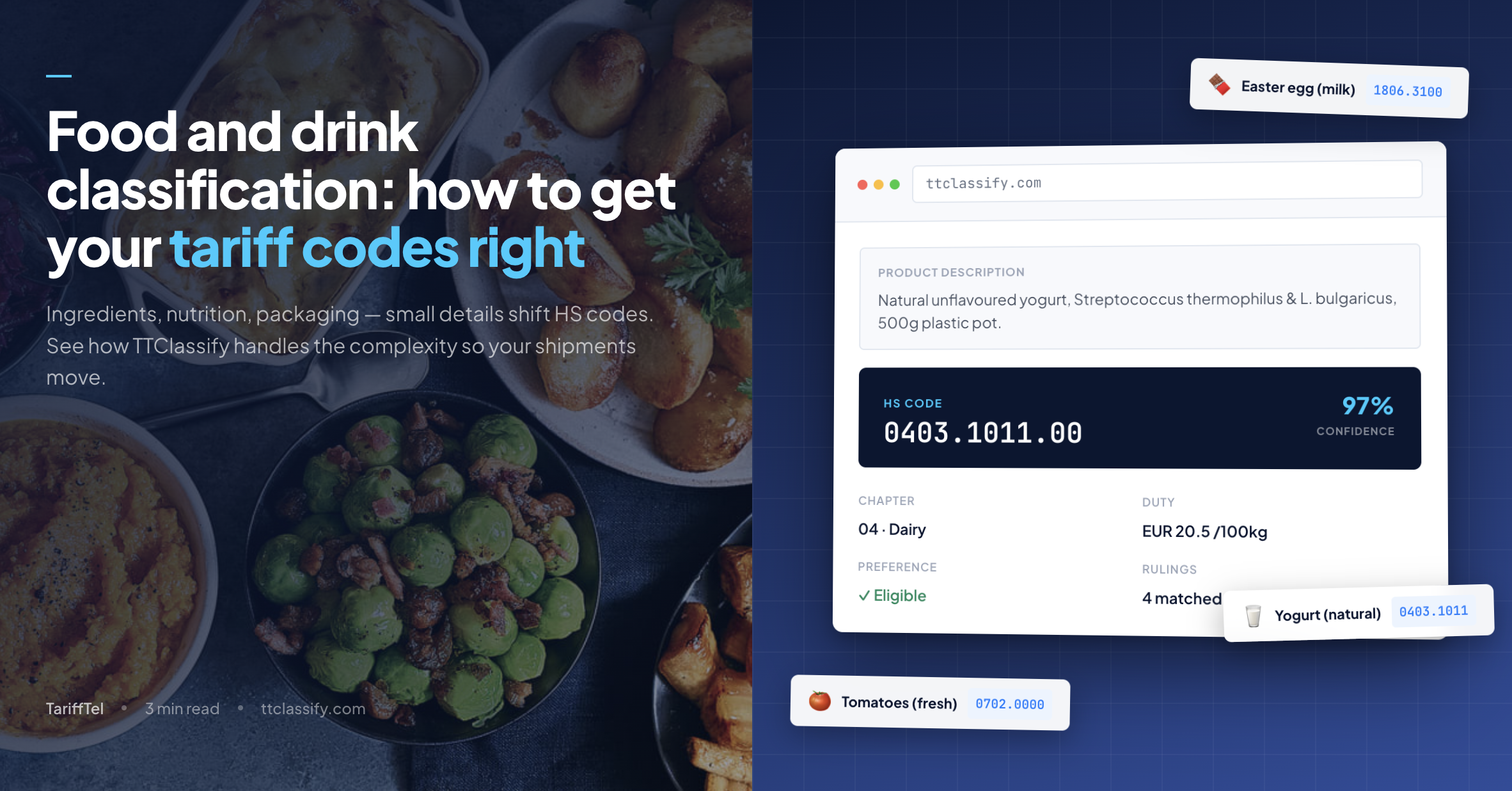
Food and drink classification: how to get your tariff codes right
 3 mins
Getting your product to market if you’re a food and drink producer or exporter isn’t always simple. Behind every successful international shipment is a complex web of customs rulings and compliance checks every one must go through. Accurate tariff codes are at the centre of this.
Here, we look at what it takes to be confident with your tariff codes. With misclassification a real risk for many businesses, how can you navigate classification more efficiently? And where do tools like TTClassify fit in to support food and drink businesses of all sizes.
The complexity of food classification
At first glance, classifying food for customs purposes might seem straightforward, just list the ingredients and provide a description, right? Not quite. The reality is that to accurately classify a product, you need to take all product information into account, including a detailed breakdown that goes far beyond the basic ingredients.
A product’s classification depends on:
-Detailed ingredient composition — even minor variations in ingredients can affect the tariff code
-Nutritional information — fat content, sugar levels, and other attributes can determine how a product is classified
-Physical state — fresh, frozen, or dried products often have different tariff codes
-Country of origin — rules of origin impact duty rates and eligibility for trade agreements
-Packaging and presentation — the way a product is packed can influence classification and duty calculations
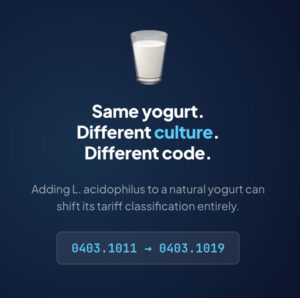
 Take the example of yogurt. A natural, unflavoured yogurt with no added sugar containing Streptococcus thermophilusand Lactobacillus delbrueckii subsp. bulgaricus falls under one tariff code. But add Lactobacillus acidophilus, and suddenly, you might be looking at a different classification entirely.
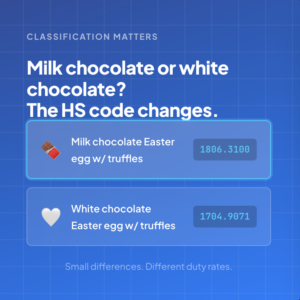
The same goes for chocolate. A milk chocolate Easter egg with truffles will have a different tariff code than a white chocolate version, even if the core product is almost identical. Small differences matter, and businesses that overlook these details can face misclassification penalties or supply chain disruptions.
Keeping up with regulatory changes
Tariff codes don’t stay the same forever. Every year, updates to the Harmonised System (HS) codes and regional regulations mean that businesses must constantly stay ahead of the curve. In 2025, for example, changes to the classification of tomatoes impacted importers and exporters globally.
Without a tariff code tool like TTClassify in place, businesses risk using outdated classifications, leading to higher-than-necessary duties or compliance failures.
 A smarter approach to classification
Food and drink businesses don’t have to spend hours researching codes. TariffTel’s easy to use tariff code tool, TTClassify, takes the guesswork out of the process by:
-Gathering precise product details from you with a few simple questions, ensuring every ingredient and characteristic is accounted for
-Cross-referencing with the latest customs rules and regulations so your codes are up-to-date and accurate at all times
-Integrating with existing systems to ensure compliance
-Take a look at how M&S Food manage their food classification simply and compliantly.
The same engine, now self-serve — TTClassify
For food and drink businesses, getting classification right isn’t just a regulatory necessity, it’s a competitive advantage. With the right tools and expertise, businesses can avoid costly surprises, streamline operations, and ensure smooth entry into global markets.
Want to see how it works for your SKUs? Try TTClassify today — or get in touch with our team.